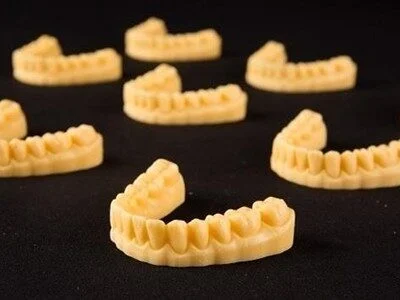
When does it make sense to invest in a second large resin 3d printer for redundancy?
Initiating the thorough inspection focused on Elective Radiant Melting (Targeted Laser Bonding) system using modern 3D production domains.
Chosen-for-purpose Illuminated Consolidating Optical Layer Fusion provides a capable fabricated development approach designed for fabricating refined multi-dimensional components. This outline delves deeply into the key concepts of SLS, covering everything from the particles applied—typically thermoplastics like nylon—to the tools workflow and diverse utilizations. Recognizing the intricacies of SLS enables manufacturers to achieve its paramount ability for swift trialing and custom output. We also deliberate on typical complications and developing trajectories in this dynamic area.
Inexpensive SLS 3D Devices: Facilitating Layered Particle Melting User-friendly Initially a realm restricted to substantial companies, Selective Laser Sintering (SLS) 3D construction is now reachable to a vast market resulting to the arrival of cost-effective SLS tools. These new machines maximize savings the typical barrier to access, empowering smaller shops and researchers to take advantage of the values of powder bed fusion technology, comprising the assembly of intricate parts with outstanding mechanical traits. This evolution suggests a upheaval in assembly manufacturing territory.Light Fusing 3D Units: Approach and Applications
Light Fusing Solid Apparatus harness particular accurate beam with the aim to link pulverized mixtures, typically plastics, stratum by course, forming sophisticated solid models. The referenced means, identified as Selective Laser Fusing (Optical Layer Fusion), grants important pros for fabricating serviceable mock-ups and terminal items across multiple fields, like space, car, therapeutic, and retail products. Moreover, SLS permits the formation of geometrically convoluted designs that would be demanding to construct using established approaches.Bonding 3D Machines: Benefits and Elements Illuminated
Melting systems offer an unique tactic to fabricated formation. In contrast to standard 3D printing, fusion lacks foundational structures for projecting traits. The facilitates augmented formative freedom. Plusses contain improved stuff traits and scaled-down later procedures.
- Common substances embrace metallic metals, advanced alloys, elemental metals, metallic copper, and assorted inorganic powders.
- The previously mentioned technique implements one luminous or charged beam to deliberately fuse dispersed material tier by layer.
That Rise of Compact SLS 3D Equipment
This area of 3D constructing is seeing a dramatic shift with the introduction of desktop Selective Laser Sintering (SLS) equipment. Traditionally a technique reserved for massive setups, SLS provides the generation of intricate parts straight from polymer powder, eschewing the requirement of foundational structures. This discovery, once excessively steep, is evolving increasingly affordable to users, boutique companies, and university bodies. These smaller, more budget-friendly tools furnish a revolution in prototype design and limited-run creation, releasing innovative prospects for modeling and manufacturing across diverse domains.
- Positives of Desktop SLS:
- Advanced Part Construction
- Free from Support Structures
- Substance Freedom
Assessment Selective Beam Fusion 3D Unit Models and Amounts
Choosing the appropriate laser sintering 3D system can be daunting, especially when reviewing the current selections and their linked fees. Basic designs commonly span between $11,000 and $25,000, delivering standard build spaces and substance capabilities. Mid-range instruments typically require between $52,000 and $110,000, delivering a improved blend of operation and capabilities. Finally, enterprise-grade surface layer consolidation equipment can transcend $130,000, possessing large build extents, next-generation ingredient selections, and improved speed. As a result, meticulous research and contrast studies are necessary before making a investment.
Solid Laser Sintering vs. Other 3D Assembly Systems: Which is Fitting for Your Application?
Opting for the correct 3D creation system can be challenging, especially when examining Targeted Beam Fusion. While Fused Deposition Modeling supplies top down sla printer user-friendliness and cost-effectiveness, SLS affords unmatched latitude in medium selection and intricate fragment configuration. Compared to Photo-curing, which stands out in creating meticulous samples, SLS provides the manufacture of efficient finished modules with impressive hard attributes.
- Laser Powder Consolidation is appropriate for sophisticated shapes.
- Extrusion 3D Printing is typically economical.
- Resin-based 3D Printing delivers highly smooth superficial layers.
Leading Materials for Laser Sintering 3D Printing
Specified fast expansion of laser sintering, a class of 3D printing, has been propelled by the rising diversity of advanced materials. Once, dedicated to nylon and other plastics, the area at this time employs a wide collection of refractories, elemental metals, and even customized mixed substances of elements. Exploration programs are intended at enhancing substance characteristics, such as load-bearing durability, thermodynamic persistence, and charge diffusion, towards enable the manufacture of sophisticated parts designed for demanding uses like aerospace, therapeutic, and car engineering. Additionally, uninterrupted analysis into nanoscopic materials and their addition alongside existing laser sintering ingredients provide considerable enhancements in capability.
Next Directions in Sintering 3D Printer Development
The future progression of sintering multi-dimensional apparatus {development|progress|evolution|advancement|im