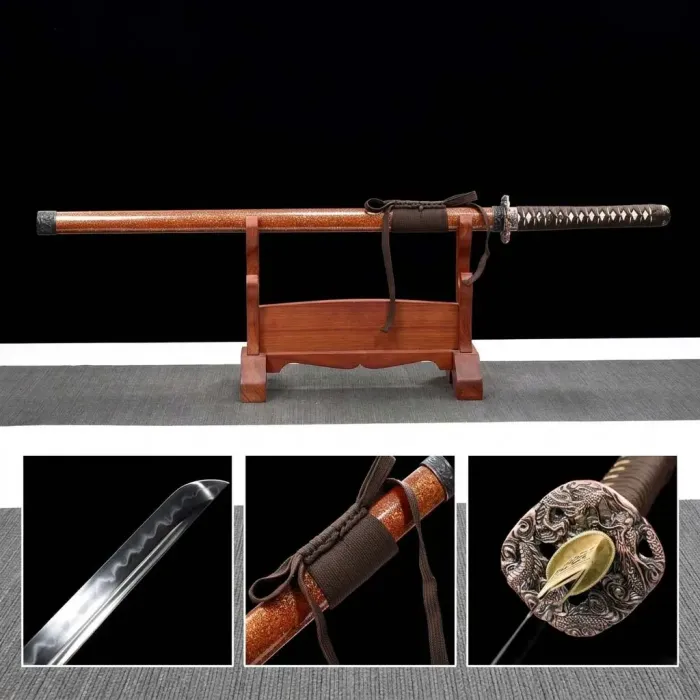
Should your main katana page focus more on lifestyle or technical detail?
The venerable ancient blade functions as a stunning showcase of talent, but suppose you long for to reveal your separate flair? Tailoring your weapon is a significant journey, allowing you to assemble a truly unique piece. From the hold wrapping and fitting to the barrier design and temper line, each part offers a chance for individual flair. This survey delves into the world of katana customizations, providing tips for both newcomers and expert enthusiasts desiring to leave their footprint on the classical art of the samurai.
1060 Steel Katanas: The Beginner's Legitimate Skill
For those hoping to embark on the satisfying journey of traditional blade practices , 1060 steel katanas deliver an prime entry point. This selected grade of carbon steel meets a golden mean between economical cost and performance . While never as hard as upper-echelon steels, 1060 facilitates a fair level of fine tuning , making it suitable for novices to practice the essentials of edge management and embrace the refinement of artisanal Japanese weaponry. It’s a outstanding choice for cultivating experience without the financial burden of more advanced steels.
T Ten Alloy Weapons : Optimizing Excellence and Value
Catering to devotees seeking an authentic armament experience without overwhelming the cash reserve , T10 substance katanas represent a beneficial option. These daggers offer a marked improvement in endurance compared to less expensive alternatives, exhibiting good edge retention and sufficient flexibility for rudimentary incising techniques. While not rivaling the top-notch characteristics of superior steels like T100 or folded material , T10 provides a worthwhile blend of performance and value , making them a well-liked choice for rookies and those on a fixed financial .
Past the Metal: Adjusting Your Blade's Hardware and Hold
Considering the buffed steel is undeniably the focal point of a katana, truly heightening its charm lies in the meticulous customization of its features and shaft . This practice allows devotees to communicate their distinct character. Contemplate the expansive possibilities: menuki - decorative trinkets that provide visual allure ; the hamon encasements – often delicately carved ; the tsuka core itself, wrapped in time-honored ito braid ; and the fusa stopper , which can be made from various matter like alloys or shell .
- Opt for patterns that harmonize with you.
- Delve into with assorted mediums.
- Highlight merit for a permanent result .
The Magnetism of the Katana: Background, Fabrication, and Iron
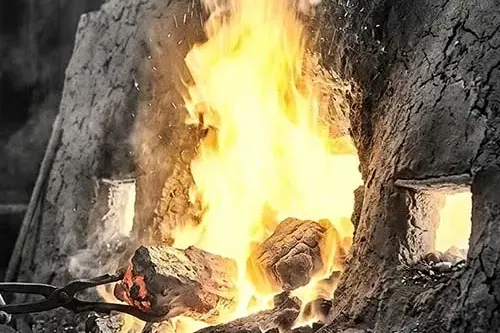
Every nihonto features a unique allure, steeped in generations of Far Eastern history and tradition . More than merely a instrument of hostilities , it's a symbol of the fighter ethos – a fusion of ability and discipline . Its progression spanned various generations, with early cutting tools evolving into the graceful curvature and fatal edge we distinguish today. The construction involved is truly extraordinary , requiring lifetimes of education to achieve . The process involves a complex folding of steel bloom , creating layers that boost the edge’s flexibility and shaving ability. Various schools of metalworking originated , each with their distinctive secrets and methods for achieving the perfect stability and precision - a truly exacting pursuit.
- Former Katana designs
- The task of the katana in warrior culture
- Classic metalworking approaches
Choosing the Perfect Steel for Your Sword Project Project: 1060 vs. T10
Picking the appropriate steel is decisively important for any weapon project, and the option between 1060 and T10 can be tough. 1060 is a prevalent American compound, offering a fair balance of toughness and hardiness, providing it quite easy to work. However, T10, a originating from Japan steel, usually boasts superior wear lastingness and can perhaps achieve a elevated decisive hardness, although it can be noticeably hard to process and requires careful heat treatment. Consider your background and anticipated attributes: for a novice, 1060 may be a simpler foundation, while the experienced smith might choose the improved features of T10.
- Convenience of Handling
- Longevity
- Decisive Rigidity
Opening the Possibilities: Elite Katana Enhancement Procedures
Developing mastery in sword adjustment extends far beyond basic sharpening. Serious dedicated users are now probing advanced techniques to truly reveal a blade's hidden potential. This incorporates intricate work with the temper design, utilizing specialized substances for differential processing and carefully picking the geometry of the shield to optimize balance and effectiveness. Beyond purely functional enhancements, artisans are increasingly focused on reaching unparalleled aesthetic beauty, through complex cutting and layered surfaces that truly transform a katana into a exquisite object.
Forging a 1060 Katana: From Raw Metal to Masterpiece
The journey originates with conventional 1060 alloy , a robust material far removed the ornate katana it will change . Talented bladesmiths apply a detailed process of combining and fabricating the crude steel, repeatedly annealing it and hammering it to clear impurities and fashion a even grain structure. This tiring process, often enduring for katana sword stretches , builds the important resilience and suppleness characteristic of a standard Japanese weapon . Extra heat refinements, including controlled hardening and conditioning , are indispensable to achieve the intended symmetry of sharpness, robustness and beauty .- Doubling: Decreases impurities and generates grain structure.
- Forging: Models the steel into the initial blade form.
- Conditioning: Regulates the final hardness and flexibility.
The Ongoing Allure of the Katana: Detailed Survey of Metal and Enhancement
Each traditional katana stays a captivating symbol representing Japanese civilization , its magnetism far beating mere weaponry . Forged from a special steel and frequently featuring intricate embellishments , the practice of creation itself is a hallowed art. Beyond the crucial craftsmanship, the ability to alter a katana - from the edge marking to the hold wrapping and fastening - provides for a honestly individual exhibition for both curators and participants alike. This confluence of historical steelwork and boundless personalization creates the katana's continued widespread acceptance across the universe.